
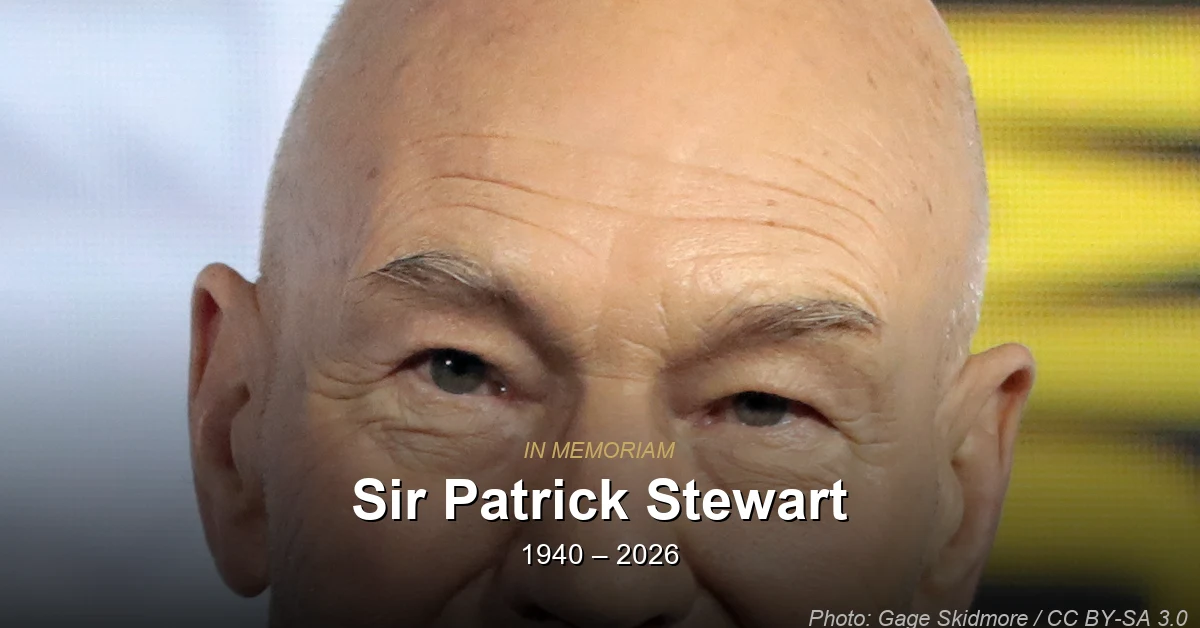

The world lost one of its finest actors on Tuesday, 28 October 2026. Sir Patrick Stewart — the man who spent decades captaining starships and leading mutants, on screen and on stage — passed away peacefully at his home in Los Angeles at the age of 86, his wife Sunny by his side. He had been living with Alzheimer’s Disease and Lewy Body Dementia.
For many of us who grew up watching late-night reruns of Star Trek: The Next Generation, or who queued up for the early X-Men films, his presence was a constant. The kind of actor who made you believe every word he said, whether he was ordering warp speed or delivering Shakespeare in a packed theatre.
From a Yorkshire Pit Town to the Royal Shakespeare Company
Patrick Stewart was born on 13 July 1940 in Mirfield, West Yorkshire — not exactly the glamorous origin story Hollywood usually writes for its legends. His father worked in the military; money was tight. But he found theatre early, and he never let go of it.
He joined the Royal Shakespeare Company in 1966 and spent years honing his craft on stage before most of the world knew his face. That discipline showed. Peers who worked with him consistently described someone who came prepared, who elevated every scene, and who took the work seriously even when surrounded by blockbuster spectacle.
Make It So
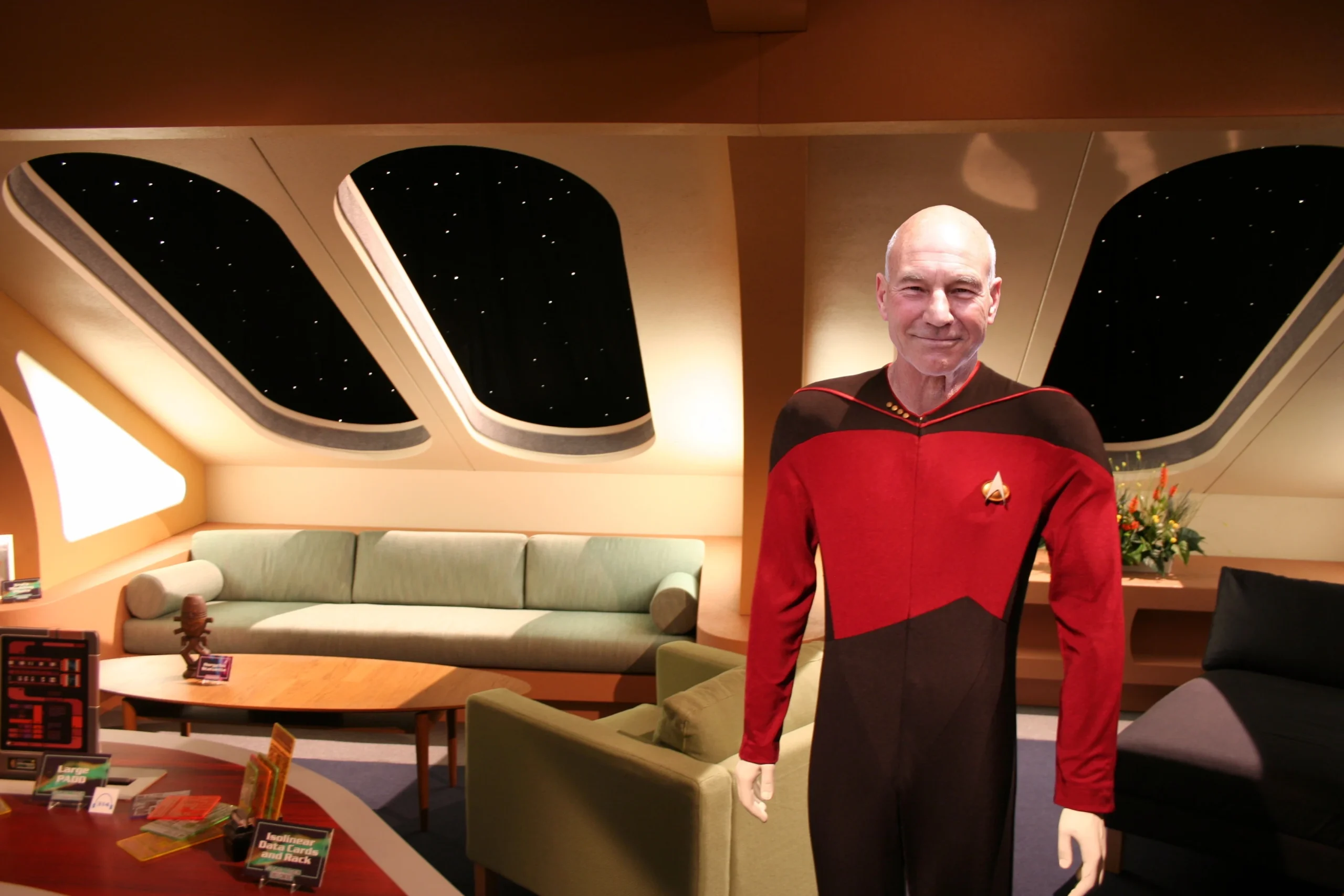
When Star Trek: The Next Generation premiered in 1987, fans were sceptical. How do you follow James T. Kirk? Turns out you don’t — you do something entirely different. Stewart’s Captain Jean-Luc Picard was measured, intellectual, and quietly devastating when the moment called for it. The show ran for seven seasons, spawned four feature films, and eventually brought him back in Star Trek: Picard — a series that gave the character a proper farewell.
The phrase “Make it so” became one of pop culture’s most quoted lines. Simple. Authoritative. Completely him. He had even been exploring plans for a Picard feature film in the months before he passed.
Professor X and a Second Act in Blockbusters

Many actors slow down after a certain age. Stewart had other plans. In 2000 he stepped into the role of Professor Charles Xavier in Bryan Singer’s X-Men, and the franchise became a second pillar of his public identity alongside Star Trek. He played Xavier across multiple films and timelines — a character defined by empathy, restraint, and an unshakeable belief in human potential.
His final performance as Xavier came in Avengers: Doomsday, a role Marvel confirmed just weeks before he died. It is a fitting coda: still working, still showing up, right to the end.
Knighthood, a Walk of Fame Star, and a Grammy
The accolades filled up over time. A Hollywood Walk of Fame star in 1996. A knighthood in 2010 — Sir Patrick from that day forward. A Grammy Award. Olivier, Tony, Golden Globe, Emmy, and SAG nominations spanning six decades. By any measure, a career of remarkable range and longevity.
Ian McKellen, his longtime co-star and close friend, wrote on social media: “He was a man to rely on, to admire and in my case, love.” Hugh Jackman, William Shatner, Wil Wheaton, and Marvel Studios were among the many who paid tribute within hours of the news breaking.
The Voice That Carried Weight
What made Stewart different from most actors of his stature was that the gravitas was never a performance — it was just how he spoke, how he held a room, how he read a line. It came from decades of stage work, from learning to fill a theatre without a microphone, from taking words seriously as things that matter.
He brought that to animated series, to audiobooks, to comedy sketches on Extras, to a beloved recurring cameo in American Dad. He was never precious about the medium. He just showed up and made it better.
A Final Goodbye
Sir Patrick Stewart leaves behind his wife Sunny Ozell, his children Daniel and Sophie, and a body of work that will outlast all of us. He was 86 years old and, by all accounts, still had more he wanted to do.
To borrow a line from the captain himself — it was, by any measure, a life well lived. Engage.
Further reading: Patrick Stewart on Wikipedia.